• Shopping Cart Shopping Cart
    0Shopping Cart
STEPDive
  • About
    • Company
    • Partners
    • Press Material
  • Business
  • Product
    • Models
      • STEPDive Family
      • STEPDive Professional
      • STEPDive Mini
    • Features
    • Technical / Safety
    • F.A.Q
  • Education
  • Shop
  • Blog
  • Contact
  • Impressum
    • Data Protection
  • Click to open the search input field Click to open the search input field Search
  • Menu Menu
  • Link to Facebook
  • Link to Instagram
  • Link to Pinterest
  • Link to LinkedIn
  • Link to Mail

Diving Training Tips: Towards Perfect Buoyancy – Breath Control

March 29, 2019/1 Comment/in Training/by Darren Osborne

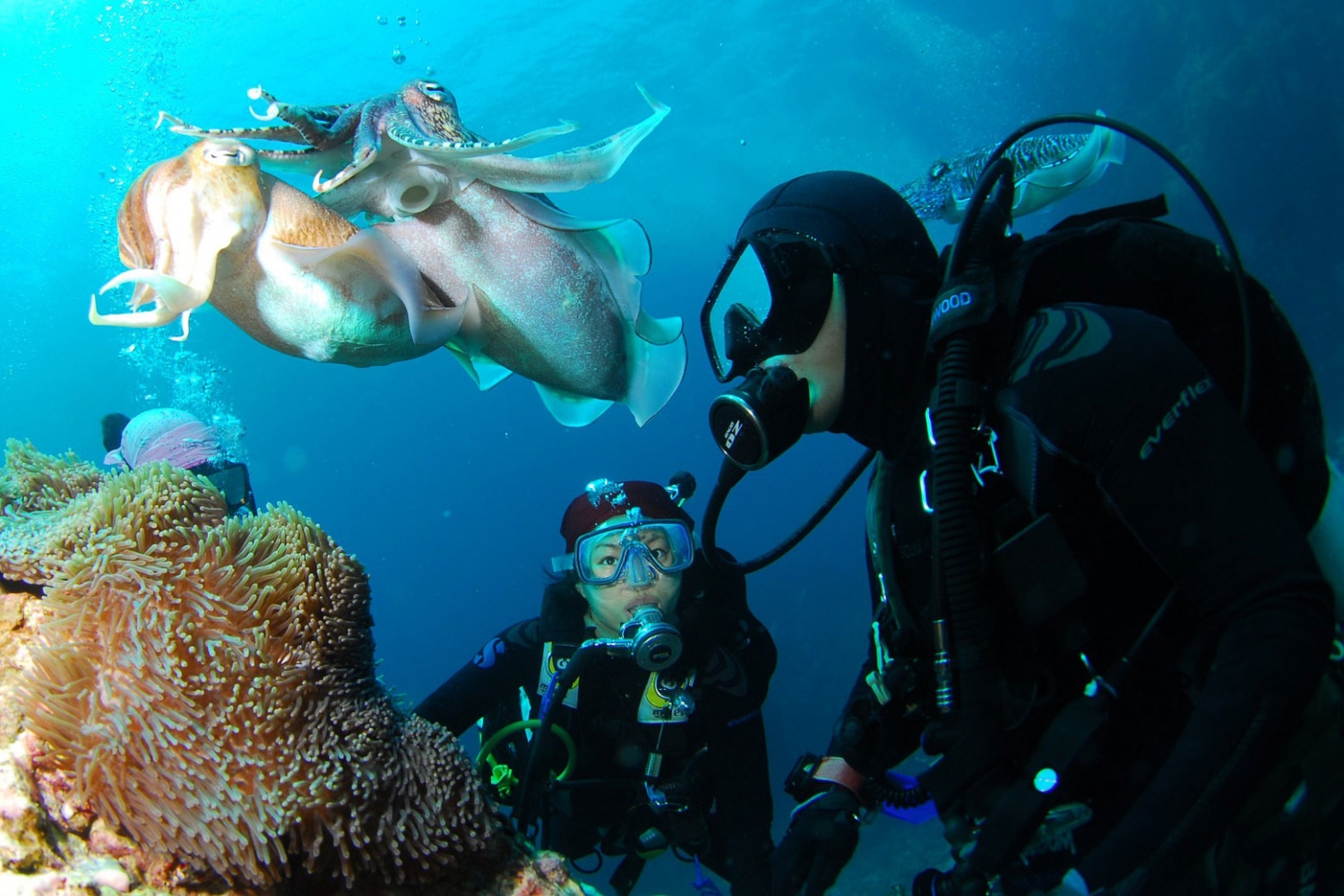
The search for perfect buoyancy is in every diver’s mind. Whether you’re new to the sport, or a certified professional, we all strive to continually demonstrate this skill. But is this ‘skill’ really within the reach of newly certified divers…? In my opinion: absolutely!

Buoyancy within regular SCUBA diving comes down to five key factors:

  • Breath control,
  • Proper weighting,
  • Balanced equipment,
  • Correct BCD usage, and
  • Anticipation and action.

And for this particular post, we will focus directly on breathing technique.

Within the PADI system, it says: “Underwater I should breathe slowly, deeply, continuously and never hold my breath.” In my opinion, the ‘slowly’ and ‘deeply’ create problems, as your buoyancy is greatly affected by how much air is in your lungs, and the duration to which it is ‘held’ there.

So instead, I have found the following ‘thirds’ model to be far more effective. Imagine your lungs being divided into thirds (it would look something like this):
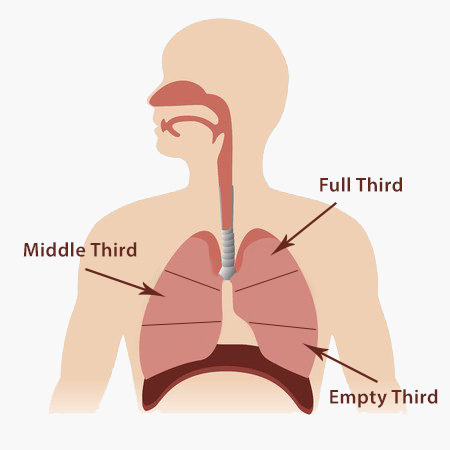
  • Empty Third: When you deliberately expire and hold less air than what is comfortable.
  • Middle Third: Normal breathing.
  • Full Third: When you breathe in more deeply and hold more air than normal.

Whilst diving, try to always breathe normally and stay within your middle third. If you want to go down, try exhaling a little more than normal and temporarily visit the ‘empty third’ of your lungs. Upon reaching the correct depth, go back to breathing normally within the ‘middle third’. The opposite is also true, so when you wish to go up, try breathing more deeply and temporarily visit the ‘full third’ of your lungs (but never hold your breath whilst ascending). With practice, you will soon realise how easy it is to modify your depth, purely by using breath control.

Of course, at some point you will be more positively or negatively buoyant (overall) and will no longer be able to maintain your position just by using your breath. If so, adjust your BCD to achieve neutral buoyancy once again. But, if you always remember to breathe first and use your BCD second, you will begin to rely less on your BCD and focus more on your position; greatly improving your air consumption and ability to maintain perfect buoyancy.

See your underwater!

:: Darren

Tags: breath control, breathing, buoyancy, scuba diving, training tips
Share this entry
  • Share on Facebook
  • Share on X
  • Share on Pinterest
  • Share on LinkedIn
  • Share on Tumblr
  • Share on Vk
  • Share on Reddit
  • Share by Mail
https://www.stepdive.com/wp-content/uploads/2019/03/scuba_diving_buoyancy_1558x1039.jpg 1039 1558 Darren Osborne https://www.stepdive.com/wp-content/uploads/2019/01/Logo2-Orange-340x156-300x138.png Darren Osborne2019-03-29 16:30:262020-04-09 17:08:53Diving Training Tips: Towards Perfect Buoyancy – Breath Control
You might also like
Children and Diving: Are they ready?
Discover a world of night diving
STEPDive: A new discovery experience
Underwater Cleanup World Record
Educational activities for children – with a diving focus!
STEPDive at the DEMA Trade Show 2018
1 reply
  1. Andrej
    Andrej says:
    April 2, 2019 at 12:12 pm

    Ain’t that the truth?! I find good buoyancy to be one of the essential scuba diving habits every new diver should master. I was thinking of various ways to teach my students and how to best help them understand BCD usage and breathing, so they can learn to hover more easily. The steps explained in this blog post do just that and are proving very useful for my entry level training sessions. Overall, it works well, plus the students seem to achieve buoyancy skills faster when they think about their breathing in this way! Maybe we could find a way to incorporate the stepdive unit into our training too.

Comments are closed.

BLOG HOME

Latest News

  • Educational activities for children – with a diving focus!April 10, 2020 - 4:00 pm
  • Discover a world of night divingAugust 7, 2019 - 11:30 am
  • Underwater Cleanup World RecordJune 17, 2019 - 10:00 am
  • DIWA PartnershipJune 7, 2019 - 10:00 am

Instagram

Follow us on Instagram!

Subscribe to our Monthly Newsletter & receive 5% off any STEPDive purchase!

Follow us on Facebook


© Copyright STEPDive 2019

Latest News

  • Educational activities for children – with a diving focus!April 10, 2020 - 4:00 pm
  • Discover a world of night divingAugust 7, 2019 - 11:30 am
  • Underwater Cleanup World RecordJune 17, 2019 - 10:00 am

AFFILIATIONS


austria wirtschafts service

DAN Professional Partner

Site Map

  • Home
  • Partners
  • Press Material
  • Business
  • STEPDive Family
  • STEPDive Professional
  • Education
  • Blog
  • Contact
Link to: Coral Reef Ecology for Kids – Join the adventure to Towabonga! Link to: Coral Reef Ecology for Kids – Join the adventure to Towabonga! Coral Reef Ecology for Kids – Join the adventure to Towabonga! Link to: DIWA Partnership Link to: DIWA Partnership DIWA Partnership
Scroll to top Scroll to top Scroll to top

This site uses cookies. By continuing to browse the site, you are agreeing to our use of cookies.

OKLearn more

Cookie and Privacy Settings


How we use cookies

We may request cookies to be set on your device. We use cookies to let us know when you visit our websites, how you interact with us, to enrich your user experience, and to customize your relationship with our website.

Click on the different category headings to find out more. You can also change some of your preferences. Note that blocking some types of cookies may impact your experience on our websites and the services we are able to offer.

Essential Website Cookies

These cookies are strictly necessary to provide you with services available through our website and to use some of its features.

Because these cookies are strictly necessary to deliver the website, refusing them will have impact how our site functions. You always can block or delete cookies by changing your browser settings and force blocking all cookies on this website. But this will always prompt you to accept/refuse cookies when revisiting our site.

We fully respect if you want to refuse cookies but to avoid asking you again and again kindly allow us to store a cookie for that. You are free to opt out any time or opt in for other cookies to get a better experience. If you refuse cookies we will remove all set cookies in our domain.

We provide you with a list of stored cookies on your computer in our domain so you can check what we stored. Due to security reasons we are not able to show or modify cookies from other domains. You can check these in your browser security settings.

Google Analytics Cookies

These cookies collect information that is used either in aggregate form to help us understand how our website is being used or how effective our marketing campaigns are, or to help us customize our website and application for you in order to enhance your experience.

If you do not want that we track your visit to our site you can disable tracking in your browser here:

Other external services

We also use different external services like Google Webfonts, Google Maps, and external Video providers. Since these providers may collect personal data like your IP address we allow you to block them here. Please be aware that this might heavily reduce the functionality and appearance of our site. Changes will take effect once you reload the page.

Google Webfont Settings:

Google Map Settings:

Google reCaptcha Settings:

Vimeo and Youtube video embeds:

Other cookies

The following cookies are also needed - You can choose if you want to allow them:

Privacy Policy

You can read about our cookies and privacy settings in detail on our Privacy Policy Page.

Data Protection
Accept settingsHide notification only